
A day at Naples Retreat’s 30-day men’s recovery program does not look like a hospital schedule, and it does not look like free time with no structure either. For a family trying to picture what a 30-day residential recovery program actually involves day to day, the short answer is this: mornings start early with a fixed routine, the middle of the day combines 12-Step work with outdoor activity in and around Naples, and evenings close with a group meeting and reflection, every day, for 30 days.
What time does the day start, and why does that matter?
Days at Naples Retreat begin early, typically with a wake-up before 7am, a shared breakfast, and a morning meditation or reflection period before the group’s first 12-Step meeting of the day. Early structure is one of the most consistent features of peer-supported recovery models: a predictable morning removes the hours where a man in early recovery is most likely to be alone with his thoughts and least likely to have a plan. Naples Retreat’s recovery mentors run the same wake-up and meeting rhythm every day of the 30 days so that structure becomes a habit, not an exception.
What does “recovery immersion” actually involve?
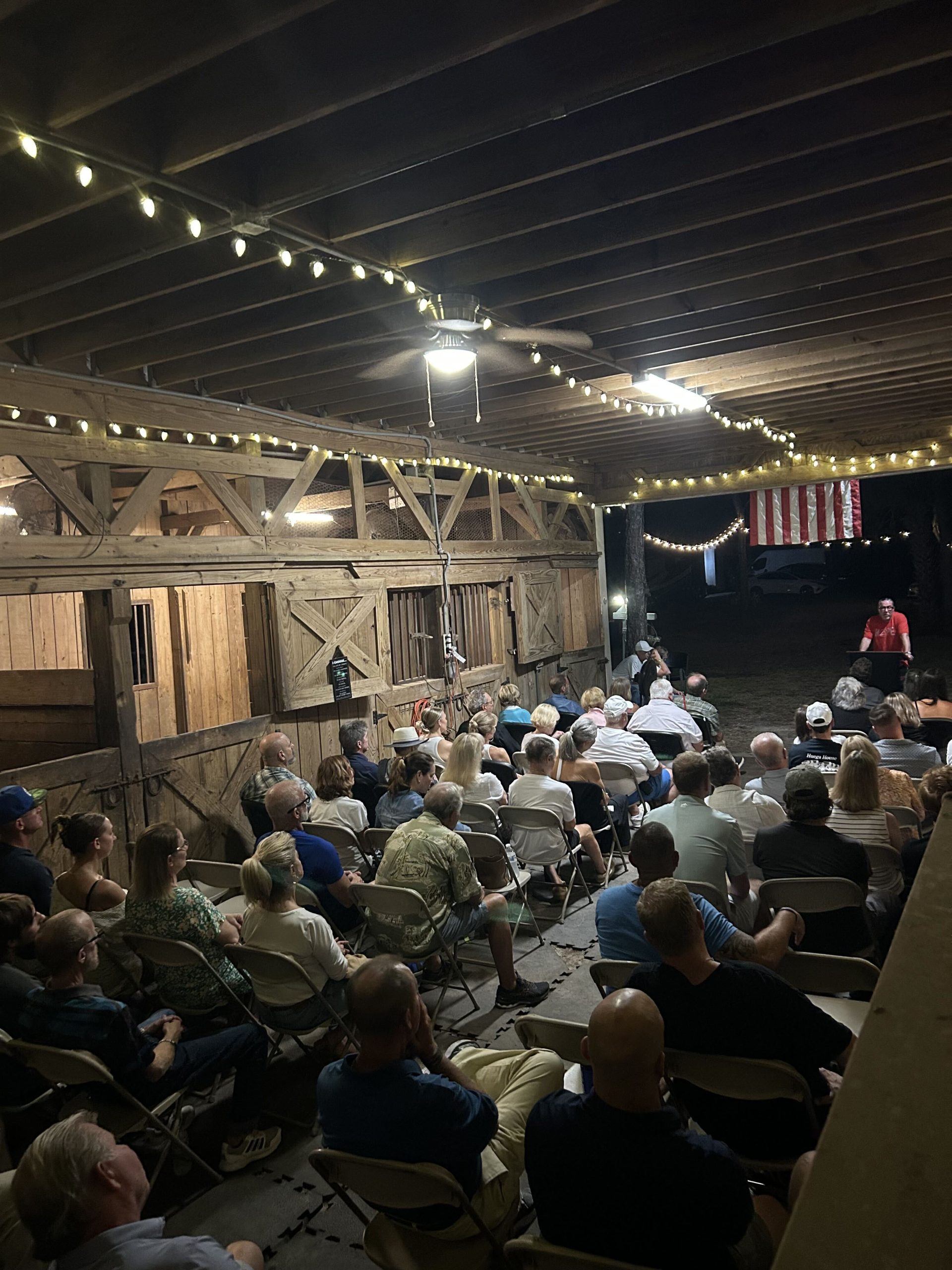
Recovery immersion is the block of the day, usually mid-morning through mid-afternoon, where the group leaves the main house for an outdoor activity on or near the ten-acre Naples property or out in Southwest Florida. This is not downtime bolted onto a clinical schedule. It is built into the program on purpose, because sitting in a room talking about sobriety and actually practicing being present, engaged, and sober in the world are two different skills. Activities rotate through the week and commonly include:
- Equine activities at the on-site barn, working directly with horses in ground exercises that require patience and read calm or escalation quickly, both of which mirror skills men are practicing in meetings
- Kayaking through the mangroves along Southwest Florida’s coastal waterways, a few hours away from a phone or a screen
- Hiking in and around the Everglades, with the physical effort and the quiet doing work that a conversation cannot
- Gulf mornings, time on or near the water that gives the group a shared, low-stakes experience to talk about afterward
None of this is presented as treatment or therapy. Naples Retreat is not a clinical facility and does not bill these activities as a medical intervention. They are part of a peer-supported, 12-Step daily structure, led by recovery mentors, not therapists, and consistent with the model described on our about page.
Where does the 12-Step work happen?
Daily 12-Step meetings anchor the schedule, typically one in the morning and one in the evening, both led within the house by recovery mentors and sponsors rather than outside staff. Step work itself, reading, writing, and one-on-one conversation with a sponsor, happens in the blocks between meetings and activities. A man working through a specific step, for example writing a Fourth Step inventory, does that work in dedicated quiet time rather than squeezing it in around other commitments, because the structure of the day protects the time for it.
What does the evening look like?
Evenings bring the group back together for a shared dinner, a second group meeting, and a closing reflection before lights out. Chapel meetings and other spiritual growth time are built into certain evenings each week, consistent with the program’s spiritual growth pillar. The day ends the same way it starts: as a group, on a schedule, not alone in a room.
How is this different from a clinical treatment day?
| Part of the day | Naples Retreat (recovery immersion) | Typical clinical treatment schedule |
|---|---|---|
| Morning | Early wake-up, group meditation, 12-Step meeting led by recovery mentors | Medication rounds, individual therapy intake, clinical check-in |
| Midday | Outdoor recovery immersion: equine activities, kayaking, hiking, Gulf time | Group therapy sessions, psychoeducation classes, indoor programming |
| Afternoon | Step work, one-on-one time with a sponsor | Individual counseling sessions, case management |
| Evening | Shared dinner, second 12-Step meeting, chapel or reflection | Evening programming, visiting hours (if residential) |
| Staff on the floor | Recovery mentors, house managers, alumni | Licensed therapists, counselors, nursing staff |
Both structures share the goal of keeping a man’s day full and purposeful. The difference is who runs it and what the model is built on: Naples Retreat’s day is run by men further along in recovery themselves, peer to peer, with no clinical staff on-site, no billed therapy sessions, and no insurance claims generated by the activities above. Research on structured daily routines in recovery, summarized by the Substance Abuse and Mental Health Services Administration, consistently points to the same pattern: predictable structure and peer connection reduce isolation in early recovery, which is exactly what both models above are trying to build, by different means.
Frequently asked questions
Is the outdoor activity optional?
Recovery immersion is a built-in part of the daily schedule, not an elective add-on. Every man in the 30-day program takes part in the rotation of equine activities, kayaking, hiking, and other outdoor time, alongside the 12-Step meeting schedule.
Does Naples Retreat call this equine therapy or adventure therapy?
No. Naples Retreat is not a licensed clinical facility and does not offer therapy of any kind. These are described as recovery immersion activities, led by recovery mentors, and they sit alongside the 12-Step structure rather than replacing any clinical service.
How much free, unstructured time is in a typical day?
Very little by design. The daily schedule is built to be full, from an early wake-up through an evening meeting, because unstructured time is when a man in early recovery is most vulnerable to old patterns. Free time exists, but it is scheduled, not open-ended.
Who leads the meetings and activities, if not clinical staff?
Recovery mentors, house managers, and alumni, not therapists or counselors. Naples Retreat operates on a peer-support, 12-Step model built on the principles of a 90-year-old fellowship, and every part of the daily schedule reflects that.
If you are trying to picture what a day for your husband or son would actually look like at Naples Retreat, the structure above is it, every day, for 30 days, in Naples, FL. You can see the full scope of the 30-day recovery program for more on how the pieces fit together. Reach out to our team to talk through what a day in the program looks like for your specific situation, or call (239) 427-2535.