
Inpatient vs. Outpatient Rehab
Choosing the right addiction treatment program is one of the most important decisions in your recovery journey. At Naples Retreat, we offer personalized, faith-guided care tailored to your needs—whether you’re seeking the deep structure of inpatient treatment or the flexibility of outpatient rehab.
Inpatient Rehab (Residential Treatment):
Definition: A full-time, live-in treatment program where individuals stay at a rehab facility for a set period (usually 30, 60, or 90 days).
Purpose: Provides a highly structured, immersive environment free from outside triggers.
Best For: People with severe addiction, a history of relapse, or co-occurring mental health disorders.
Includes:
- 24/7 supervision
- Medical and psychological support
- Daily therapy and 12-Step work
- Group and individual counseling
- Wellness and life skills training
Outpatient Rehab:
Definition: A part-time treatment program where individuals live at home but attend therapy and counseling sessions at a facility on a set schedule.
Purpose: Allows individuals to maintain work, school, or family responsibilities while getting treatment.
Best For: Those with mild to moderate addiction, strong support systems, or who have completed inpatient care.
Includes:
- Scheduled therapy sessions
- Group support and education
- Continued 12-Step or spiritual work
- Less supervision and structure
What’s the Difference Between Inpatient and Outpatient Rehab?
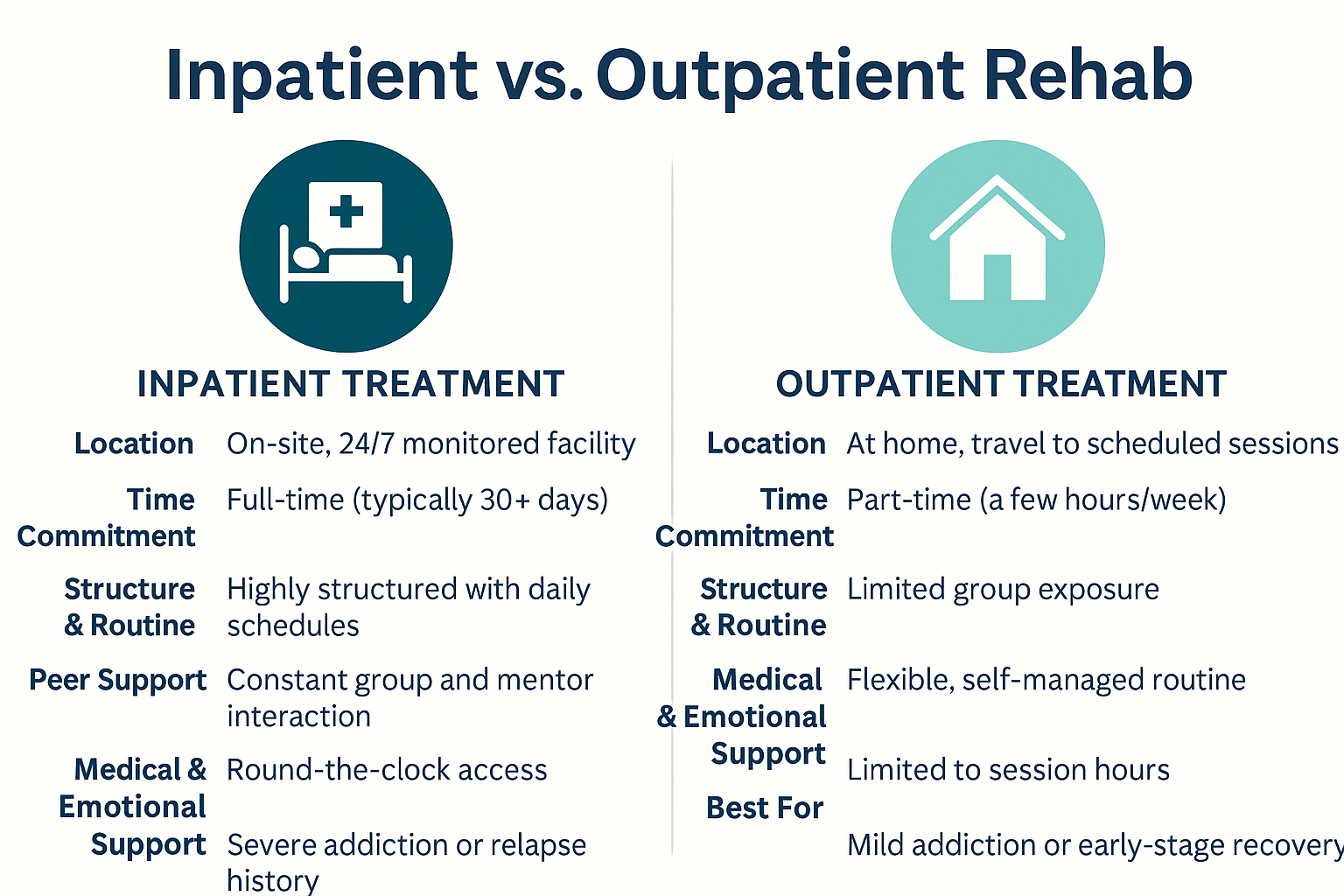
| Feature | Inpatient Treatment | Outpatient Treatment |
| Location | On-site, 24/7 monitored facility | At home, travel to scheduled sessions |
| Time Commitment | Full-time (typically 30+ days) | Part-time (a few hours/week) |
| Structure & Routine | Highly structured with daily schedules | Flexible, self-managed routine |
| Peer Support | Constant group and mentor interaction | Limited group exposure |
| Medical & Emotional Support | Round-the-clock access | Limited to session hours |
| Best For | Severe addiction or relapse history | Mild addiction or early-stage recovery |
Why Inpatient Treatment Offers a Deeper Healing Experience
If you’ve experienced relapse, long-term substance use, or struggle with emotional regulation, inpatient rehab can be life-changing. At Naples Retreat, our 30-day men’s residential program includes:
- Daily 12-Step meetings and spiritual mentorship
- Peer-led accountability groups
- Wellness therapies (fitness, nutrition, mindfulness)
- One-on-one counseling and trauma-informed care
- Post-treatment planning and sober living transition
“This was more than rehab—it was a reset for my life.”
— Michael D., Naples Retreat Alumni
What to Expect in Our 30-Day Inpatient Program
We combine spiritual recovery, clinical care, and structured living to help you rebuild from the inside out.
Daily Routine Sample:
| Time | Activity |
| 7:00 AM | Morning meditation and prayer |
| 8:00 AM | Healthy breakfast & wellness check-in |
| 9:00 AM | Group therapy / 12-Step work |
| 12:00 PM | Lunch and outdoor reflection |
| 1:00 PM | Individual therapy / peer mentorship |
| 4:00 PM | Fitness or creative therapy session |
| 6:00 PM | Dinner and gratitude journaling |
| 8:00 PM | Evening fellowship and quiet reflection |
When Is Outpatient Treatment a Better Fit?
Outpatient programs can be highly effective for those with:
- Strong home and social support
- Work or family obligations
- Early-stage substance use disorder
- Completed prior inpatient treatment
Understanding the 12 Steps of AA in Both Models
Whether you choose inpatient or outpatient rehab, the 12 Steps of Alcoholics Anonymous (AA) remain central to recovery:
- Admitting powerlessness over alcohol
- Believing in a higher power
- Turning over your will
- Self-inventory
- Admitting wrongs
- Willingness to change
- Asking a higher power to remove shortcomings
- Making a list of those harmed
- Making amends
- Continued personal inventory
- Prayer and meditation
- Carrying the message to others
At Naples Retreat, the 12 Steps are integrated into every stage of our program, especially in inpatient treatment where group discussions and personal mentorship deepen your spiritual journey.
Inpatient and Outpatient Treatment: Which Is More Effective?
A 2024 study by the National Institute on Drug Abuse (NIDA) found:
- Inpatient rehab has a 70–80% completion rate when paired with sober housing
- Outpatient rehab showed success rates of 35–50% depending on intensity and support systems
- Long-term outcomes are strongest when aftercare and 12-Step participation are maintained
How Naples Retreat Supports You, No Matter Your Choice
Whether you’re stepping into our all-male, structured inpatient program or transitioning to an outpatient setting, our goal is the same:
Long-term sobriety, emotional resilience, and spiritual renewal.
We offer:
- Individualized care plans for both inpatient and outpatient paths
- Relapse prevention tools and life skills training
- Alumni network and peer support
- Aftercare coordination including sober living options
Why Naples Retreat Is the Right Choice for Inpatient Care
Located in peaceful Naples, Florida, our center is purpose-built for healing:
- Safe, supportive men-only environment
- Beautiful outdoor recovery space
- Dedicated staff with lived experience in recovery
- Affordable care options & donation-supported programs
Take the First Step Toward Recovery Today
If you or a loved one is struggling with addiction, now is the time to make a change.
Located in peaceful Naples, Florida, our center is purpose-built for healing:
- Safe, supportive men-only environment
- Beautiful outdoor recovery spaces
- Dedicated staff with lived experience in recovery
- Affordable care options & donation-supported programs
Conclusion: Inpatient vs. Outpatient Rehab—It’s About What You Need Most
Choosing between inpatient and outpatient treatment is deeply personal. At Naples Retreat, we’re here to help you decide based on where you are and what you need most. You don’t have to face addiction alone. Let’s walk this journey—together. You don’t have to face addiction alone—connect with us or call +1 (239) 427-2535 to explore the support available and take your next step toward recovery.